Opening a retail business starts with choosing the right location, but purchasing or leasing a property is only one part of the process. Before committing to a storefront, it is essential to understand Brooklyn, CT, retail zoning laws and how they affect your plans.
Whether you're a homebuyer considering a mixed-use property, an investor exploring commercial opportunities, or someone planning to open a neighborhood shop, knowing the local zoning requirements can help you avoid costly delays and unexpected expenses.
Here's what you need to know.
What to Know About Brooklyn, CT Retail Zoning Laws
The Foundation of Local Business
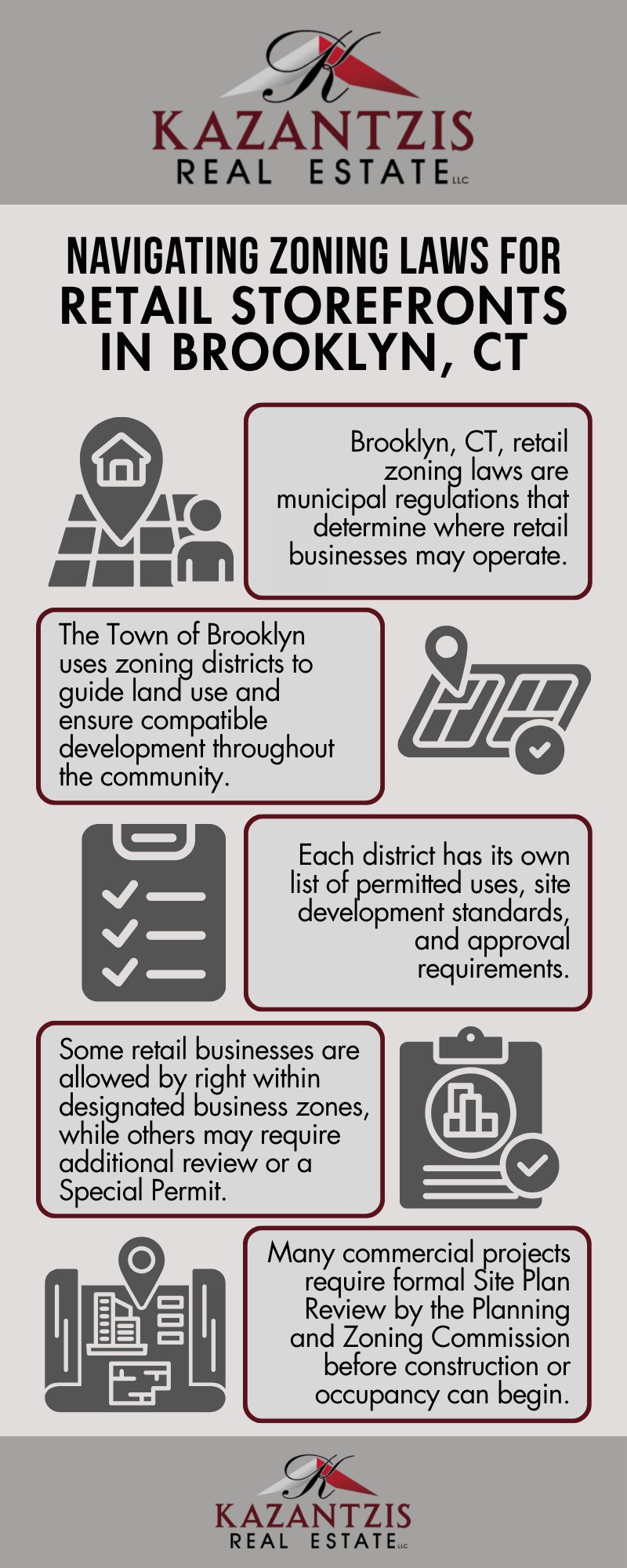
Brooklyn, CT, retail zoning laws are municipal regulations that determine where retail businesses may operate.
These rules govern permitted land uses, building modifications, signage, parking, and certain operational requirements to support orderly development while preserving Brooklyn's rural New England character and historic appeal.
The Town of Brooklyn uses zoning districts to guide land use and ensure compatible development throughout the community. Each district has its own list of permitted uses, site development standards, and approval requirements.
Some retail businesses are allowed by right within designated business zones, while others may require additional review or a Special Permit, depending on the proposed use and location.

Evaluating Brooklyn CT Commercial Real Estate
Brooklyn offers a modest but attractive commercial real estate market, with properties ranging from village storefronts to standalone commercial buildings along major travel corridors.
Its location near Interstate 395 and Route 6 provides convenient access for both local residents and regional visitors. However, finding an appealing property does not automatically mean your business can legally operate there.
Before signing a purchase agreement or lease, verify that the property's zoning designation permits your intended retail use. Two neighboring properties may appear similar yet fall under different zoning districts with different permitted uses and development standards.
Taking this step early can prevent expensive redesigns, permit issues, or even having to relocate after investing in the property.
Where to Find Brooklyn, CT Zoning Regulations
Accessing Municipal Documents
The most reliable source for Brooklyn, CT zoning regulations is the Town of Brooklyn's Land Use Department.
Property owners and prospective buyers should review:
- The official zoning map
- Current zoning regulations
- Site plan requirements
- Special Permit procedures
- Land use application forms

These documents are available through the Land Use Department at Town Hall and on the town's official website.
Reviewing the zoning map allows you to identify the property's zoning district and understand what types of retail activities are permitted before moving forward with a transaction.
Consulting the Zoning Enforcement Officer
Even after reviewing the regulations, scheduling a preliminary meeting with the Zoning Enforcement Officer is one of the smartest steps you can take.
The officer can:
- Confirm the property's zoning classification
- Explain whether your retail use is permitted
- Identify permit requirements
- Discuss site improvements that may be necessary
- Clarify how local ordinances apply to your specific parcel
Early communication often saves applicants weeks—or even months—during the approval process by identifying potential concerns before formal plans are submitted.
Complying With Retail Storefront Regulations in Brooklyn, CT
Exterior Signage and Aesthetics
One important aspect of retail storefront regulations in Brooklyn, CT, involves maintaining the town's traditional appearance.
Commercial signs are subject to standards governing their:
- Size
- Placement
- Height
- Illumination
- Design
These requirements help preserve the classic New England streetscape while ensuring businesses remain visible to customers.

Exterior renovations, façade improvements, lighting, and other visible changes may also require zoning approval, particularly if they alter the building's appearance or affect neighboring properties.
Planning these improvements before construction begins can help avoid unnecessary revisions.
Parking and Accessibility Requirements
Parking is another major consideration under local zoning regulations.
Retail developments are generally required to provide sufficient off-street parking based on factors such as the building's size and intended use. Site plans must demonstrate that adequate parking is available for both customers and employees while maintaining safe vehicle circulation.
Accessible parking spaces must also comply with federal accessibility standards under the Americans with Disabilities Act (ADA), ensuring customers with disabilities have safe access to the business.
Thoughtful parking design benefits both customers and neighboring businesses while helping reduce traffic congestion.
Securing Brooklyn, CT Business Permits
The Application Process
Obtaining Brooklyn CT business permits often involves multiple steps, especially when opening a new retail location or modifying an existing building.
Depending on the project, applicants may need to submit:
- Completed zoning applications
- Site plans
- Architectural drawings
- Floor plans
- Parking layouts
- Landscaping plans
- Utility information
Many commercial projects require formal Site Plan Review by the Planning and Zoning Commission before construction or occupancy can begin.
During the review process, officials evaluate whether the proposal complies with zoning regulations, parking standards, drainage requirements, traffic safety, and other municipal requirements.
Providing complete and accurate documentation from the beginning helps keep the review process moving efficiently.
Special Permits and Public Hearings
Some retail uses are not automatically permitted within certain zoning districts and instead require a Special Permit.
If a Special Permit is necessary, applicants typically participate in a public hearing before the Planning and Zoning Commission.
During the hearing:
- The proposed project is presented.
- Commission members ask questions.
- Residents have an opportunity to provide comments.
- The Commission evaluates whether the proposal satisfies applicable zoning standards.
Public hearings are a normal part of Connecticut's land use process and allow community input before significant land use decisions are made.
Preparing thorough plans and addressing potential neighborhood concerns ahead of time can improve the overall review experience.
Understanding Retail Property Rules in Connecticut
State Versus Local Guidelines
While municipalities establish zoning regulations, Connecticut also enforces statewide building and safety requirements.
For retail projects, state regulations commonly address:
- Building codes
- Fire safety standards
- Energy code compliance
- ADA accessibility
- Health and safety requirements
Meanwhile, the Town of Brooklyn administers local zoning requirements related to land use, signage, parking, setbacks, site development, and architectural compatibility.
Successful retail projects must satisfy both state and local requirements before opening for business.
Building a Professional Team
Commercial development often involves several professionals working together.
Experienced local consultants can help streamline the approval process, including:
- Commercial real estate agents
- Land use attorneys
- Civil engineers
- Architects
- Surveyors
- Environmental consultants, when necessary

Professionals who regularly work within Brooklyn understand local review procedures, documentation requirements, and municipal expectations, helping applicants avoid common mistakes that can delay approvals.
Preparation Guarantees Compliance
Opening a retail storefront in Brooklyn requires more than selecting a desirable location.
Success begins with understanding Brooklyn CT retail zoning laws, reviewing the applicable Brooklyn CT zoning regulations, and complying with all retail storefront regulations Brooklyn CT before construction or occupancy begins.
By verifying zoning early, securing required permits, preparing complete site plans, and working with knowledgeable local professionals, property owners can move through the approval process with greater confidence and fewer surprises.
If you're considering purchasing commercial property or exploring investment opportunities in Brooklyn, CT, working with an experienced local real estate professional can help you identify properties that align with both your business goals and local zoning requirements.
Ready to explore commercial or mixed-use properties in Brooklyn, CT? Contact us today at (860) 774-2733 or email kazantzisa.re@gmail.com to discuss your real estate goals and receive expert local guidance.
Frequently Asked Questions
What are the retail zoning laws for exterior signage in Brooklyn, CT?
Where can I find the official zoning regulations map for Brooklyn, CT?
Do retail storefront regulations in Brooklyn, CT, require a specific number of parking spaces?
How do I apply for business permits in Brooklyn, CT, for a new shop?
Are there specific retail property rules in Connecticut regarding historic districts?
How long does a retail zoning permit typically take to process in Brooklyn, CT?
Who enforces commercial real estate zoning laws in Brooklyn, CT?