Area Real Estate News & Market Trends

You’ll find our blog to be a wealth of information, covering everything from local market statistics and home values to community happenings. That’s because we care about the community and want to help you find your place in it. Please reach out if you have any questions at all. We’d love to talk with you!

July 24, 2026

Navigating Zoning Laws for Retail Storefronts in Brooklyn, CT

Navigating Zoning Laws for Retail Storefronts in Brooklyn, CT

Opening a retail business starts with choosing the right location, but purchasing or leasing a property is only one part of the process. Before committing to a storefront, it is essential to understand Brooklyn, CT, retail zoning laws and how they affect your plans.


Whether you're a homebuyer considering a mixed-use property, an investor exploring commercial opportunities, or someone planning to open a neighborhood shop, knowing the local zoning requirements can help you avoid costly delays and unexpected expenses. 


Here's what you need to know.


What to Know About Brooklyn, CT Retail Zoning Laws


The Foundation of Local Business

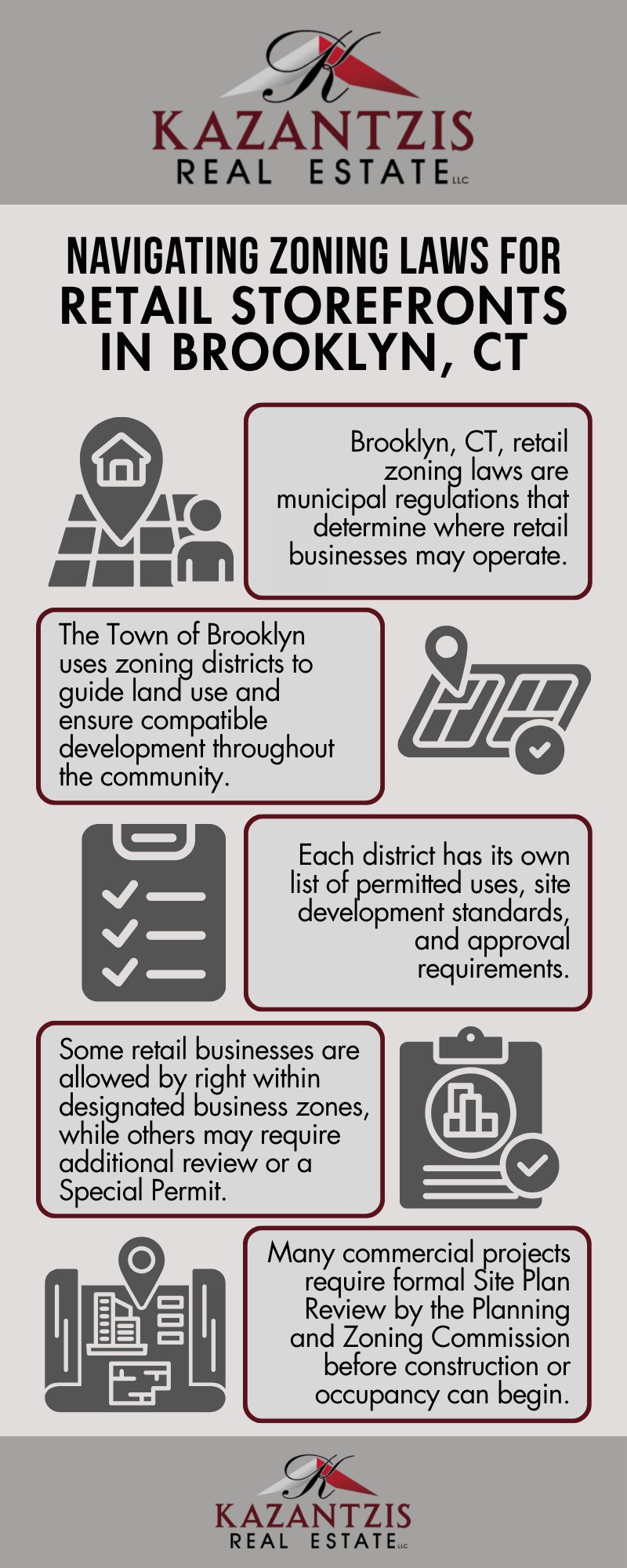
Brooklyn, CT, retail zoning laws are municipal regulations that determine where retail businesses may operate. 


These rules govern permitted land uses, building modifications, signage, parking, and certain operational requirements to support orderly development while preserving Brooklyn's rural New England character and historic appeal.


The Town of Brooklyn uses zoning districts to guide land use and ensure compatible development throughout the community. Each district has its own list of permitted uses, site development standards, and approval requirements. 


Some retail businesses are allowed by right within designated business zones, while others may require additional review or a Special Permit, depending on the proposed use and location.


business people preparing schemes on papaer at table


Evaluating Brooklyn CT Commercial Real Estate

Brooklyn offers a modest but attractive commercial real estate market, with properties ranging from village storefronts to standalone commercial buildings along major travel corridors. 


Its location near Interstate 395 and Route 6 provides convenient access for both local residents and regional visitors. However, finding an appealing property does not automatically mean your business can legally operate there.


Before signing a purchase agreement or lease, verify that the property's zoning designation permits your intended retail use. Two neighboring properties may appear similar yet fall under different zoning districts with different permitted uses and development standards.


Taking this step early can prevent expensive redesigns, permit issues, or even having to relocate after investing in the property.


Where to Find Brooklyn, CT Zoning Regulations


Accessing Municipal Documents

The most reliable source for Brooklyn, CT zoning regulations is the Town of Brooklyn's Land Use Department.


Property owners and prospective buyers should review:


  • The official zoning map
  • Current zoning regulations
  • Site plan requirements
  • Special Permit procedures
  • Land use application forms


a person holding paperwork beside a pen


These documents are available through the Land Use Department at Town Hall and on the town's official website.


Reviewing the zoning map allows you to identify the property's zoning district and understand what types of retail activities are permitted before moving forward with a transaction.


Consulting the Zoning Enforcement Officer

Even after reviewing the regulations, scheduling a preliminary meeting with the Zoning Enforcement Officer is one of the smartest steps you can take.


The officer can:


  • Confirm the property's zoning classification
  • Explain whether your retail use is permitted
  • Identify permit requirements
  • Discuss site improvements that may be necessary
  • Clarify how local ordinances apply to your specific parcel


Early communication often saves applicants weeks—or even months—during the approval process by identifying potential concerns before formal plans are submitted.


Complying With Retail Storefront Regulations in Brooklyn, CT


Exterior Signage and Aesthetics

One important aspect of retail storefront regulations in Brooklyn, CT, involves maintaining the town's traditional appearance.


Commercial signs are subject to standards governing their:


  • Size
  • Placement
  • Height
  • Illumination
  • Design


These requirements help preserve the classic New England streetscape while ensuring businesses remain visible to customers.


cozy italian cafe exterior sign with menu awning


Exterior renovations, façade improvements, lighting, and other visible changes may also require zoning approval, particularly if they alter the building's appearance or affect neighboring properties.


Planning these improvements before construction begins can help avoid unnecessary revisions.


Parking and Accessibility Requirements

Parking is another major consideration under local zoning regulations.


Retail developments are generally required to provide sufficient off-street parking based on factors such as the building's size and intended use. Site plans must demonstrate that adequate parking is available for both customers and employees while maintaining safe vehicle circulation.


Accessible parking spaces must also comply with federal accessibility standards under the Americans with Disabilities Act (ADA), ensuring customers with disabilities have safe access to the business.


Thoughtful parking design benefits both customers and neighboring businesses while helping reduce traffic congestion.


Securing Brooklyn, CT Business Permits


The Application Process

Obtaining Brooklyn CT business permits often involves multiple steps, especially when opening a new retail location or modifying an existing building.


Depending on the project, applicants may need to submit:


  • Completed zoning applications
  • Site plans
  • Architectural drawings
  • Floor plans
  • Parking layouts
  • Landscaping plans
  • Utility information


Many commercial projects require formal Site Plan Review by the Planning and Zoning Commission before construction or occupancy can begin.


During the review process, officials evaluate whether the proposal complies with zoning regulations, parking standards, drainage requirements, traffic safety, and other municipal requirements.


Providing complete and accurate documentation from the beginning helps keep the review process moving efficiently.


Special Permits and Public Hearings

Some retail uses are not automatically permitted within certain zoning districts and instead require a Special Permit.


If a Special Permit is necessary, applicants typically participate in a public hearing before the Planning and Zoning Commission.


During the hearing:


  • The proposed project is presented.
  • Commission members ask questions.
  • Residents have an opportunity to provide comments.
  • The Commission evaluates whether the proposal satisfies applicable zoning standards.


Public hearings are a normal part of Connecticut's land use process and allow community input before significant land use decisions are made.


Preparing thorough plans and addressing potential neighborhood concerns ahead of time can improve the overall review experience.


Understanding Retail Property Rules in Connecticut


State Versus Local Guidelines

While municipalities establish zoning regulations, Connecticut also enforces statewide building and safety requirements.


For retail projects, state regulations commonly address:


  • Building codes
  • Fire safety standards
  • Energy code compliance
  • ADA accessibility
  • Health and safety requirements


Meanwhile, the Town of Brooklyn administers local zoning requirements related to land use, signage, parking, setbacks, site development, and architectural compatibility.


Successful retail projects must satisfy both state and local requirements before opening for business.


Building a Professional Team

Commercial development often involves several professionals working together.


Experienced local consultants can help streamline the approval process, including:


  • Commercial real estate agents
  • Land use attorneys
  • Civil engineers
  • Architects
  • Surveyors
  • Environmental consultants, when necessary


man in black suit jacket writing on white paper


Professionals who regularly work within Brooklyn understand local review procedures, documentation requirements, and municipal expectations, helping applicants avoid common mistakes that can delay approvals.


Preparation Guarantees Compliance


Opening a retail storefront in Brooklyn requires more than selecting a desirable location. 


Success begins with understanding Brooklyn CT retail zoning laws, reviewing the applicable Brooklyn CT zoning regulations, and complying with all retail storefront regulations Brooklyn CT before construction or occupancy begins.


By verifying zoning early, securing required permits, preparing complete site plans, and working with knowledgeable local professionals, property owners can move through the approval process with greater confidence and fewer surprises.


If you're considering purchasing commercial property or exploring investment opportunities in Brooklyn, CT, working with an experienced local real estate professional can help you identify properties that align with both your business goals and local zoning requirements.


Ready to explore commercial or mixed-use properties in Brooklyn, CT? Contact us today at (860) 774-2733 or email kazantzisa.re@gmail.com to discuss your real estate goals and receive expert local guidance.


Navigating Zoning Laws for Retail Storefronts in Brooklyn, CT

Frequently Asked Questions

What are the retail zoning laws for exterior signage in Brooklyn, CT?
Brooklyn regulates commercial signage through its zoning regulations. Requirements typically address sign size, location, lighting, and design to ensure compatibility with the surrounding community.
Where can I find the official zoning regulations map for Brooklyn, CT?
The official zoning map is available through the Town of Brooklyn Land Use Department and on the municipality's official website.
Do retail storefront regulations in Brooklyn, CT, require a specific number of parking spaces?

Yes. Off-street parking requirements generally depend on the type of retail use and the size of the building. The Planning and Zoning Commission reviews parking as part of the site plan approval process.
How do I apply for business permits in Brooklyn, CT, for a new shop?
Applicants typically submit zoning applications, site plans, architectural drawings, and supporting documentation to the Land Use Department. Some projects also require Planning and Zoning Commission review.
Are there specific retail property rules in Connecticut regarding historic districts?
Yes. Properties located within or near designated historic areas may be subject to additional review or preservation requirements, depending on their location and the nature of the proposed work.
How long does a retail zoning permit typically take to process in Brooklyn, CT?

Processing times vary based on the project's complexity, whether a Site Plan Review or Special Permit is required, and the Planning and Zoning Commission meeting schedule. Straightforward applications generally move faster than projects requiring public hearings.
Who enforces commercial real estate zoning laws in Brooklyn, CT?
The Town of Brooklyn's Zoning Enforcement Officer administers and enforces local zoning regulations, while the Planning and Zoning Commission reviews applications requiring formal approval.


Posted in Real Estate Blogs
June 29, 2026

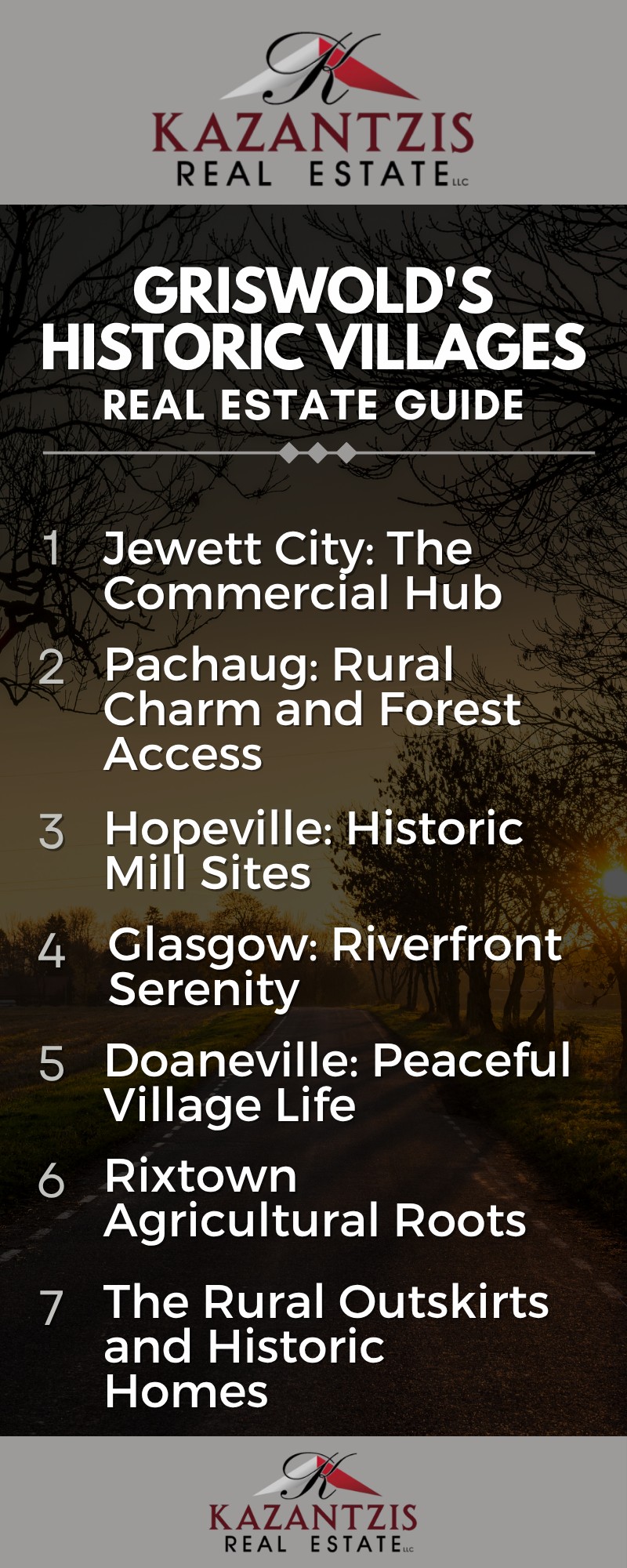
Griswold's 7 Historic Villages Real Estate Guide

Griswold's 7 Historic Villages Real Estate Guide


Located in eastern Connecticut, Griswold offers a classic New England lifestyle defined by beautiful rivers, dense state forests, and deep industrial roots. 


Unlike many small towns, Griswold is made up of seven distinct historic villages, each with its own character and housing options. 


Whether you're looking for an antique farmhouse, a riverfront retreat, or a move-in-ready home, Griswold historic villages real estate offers a diverse selection of properties for first-time buyers and anyone seeking the charm of rural New England.


What Defines Griswold Historic Villages Real Estate?

Griswold historic villages real estate is defined by a mix of 19th-century mill homes, sprawling agricultural acreage, and riverfront properties. Buyers searching for Griswold 7 villages homes for sale will find exceptional value, historic character, and quiet rural living, particularly in established areas like Jewett City, Pachaug, and Hopeville.


Exploring the 7 Historic Villages of Griswold

Each of Griswold's seven historic villages has its own personality, history, and housing options. 


From the walkable streets of Jewett City to the wooded landscapes of Pachaug, exploring these distinct communities can help you find the neighborhood that best matches your lifestyle, budget, and long-term goals.


a woman driking wine inside a restaurant


1. Jewett City: The Commercial Hub

The Vibe and Appeal


Although often mistaken for a separate town, Jewett City is the only incorporated borough within Griswold. 


It serves as the community's commercial center, offering a convenient mix of residential neighborhoods, locally owned restaurants, shops, municipal offices, schools, and public parks along the Quinebaug River.


Residents appreciate the walkable downtown atmosphere, which is uncommon in many rural Connecticut communities. 


Daily errands, local events, and community gatherings are all easily accessible, making Jewett City especially attractive for buyers who value convenience without sacrificing small-town character.


Buyer Strategy


First-time buyers searching for a Griswold house for sale frequently begin their search in Jewett City because housing is generally more affordable than in many neighboring Connecticut communities.


The housing inventory includes:


  • Historic Colonial homes
  • Restored Victorian residences
  • Multi-family investment properties
  • Modestly sized ranch homes
  • Updated single-family residences


For buyers working within a budget, Jewett City often delivers strong value while remaining close to employment centers in Norwich and Groton.


2. Pachaug: Rural Charm and Forest Access

Unrestricted Space


Pachaug represents the quieter side of the Griswold village lifestyle. 


The area borders Pachaug State Forest, Connecticut's largest state forest, encompassing more than 27,000 acres of hiking trails, fishing areas, camping facilities, horseback riding trails, and wildlife habitats.


Many properties feature several acres of land, making the neighborhood attractive to homeowners seeking privacy, hobby farms, or equestrian opportunities.


Buyers searching for larger parcels often find:


    • Custom-built homes
    • Contemporary country residences
    • Antique farmhouses
    • Horse properties
    • Wooded building lots


The peaceful surroundings appeal to those who prefer outdoor recreation over suburban density.


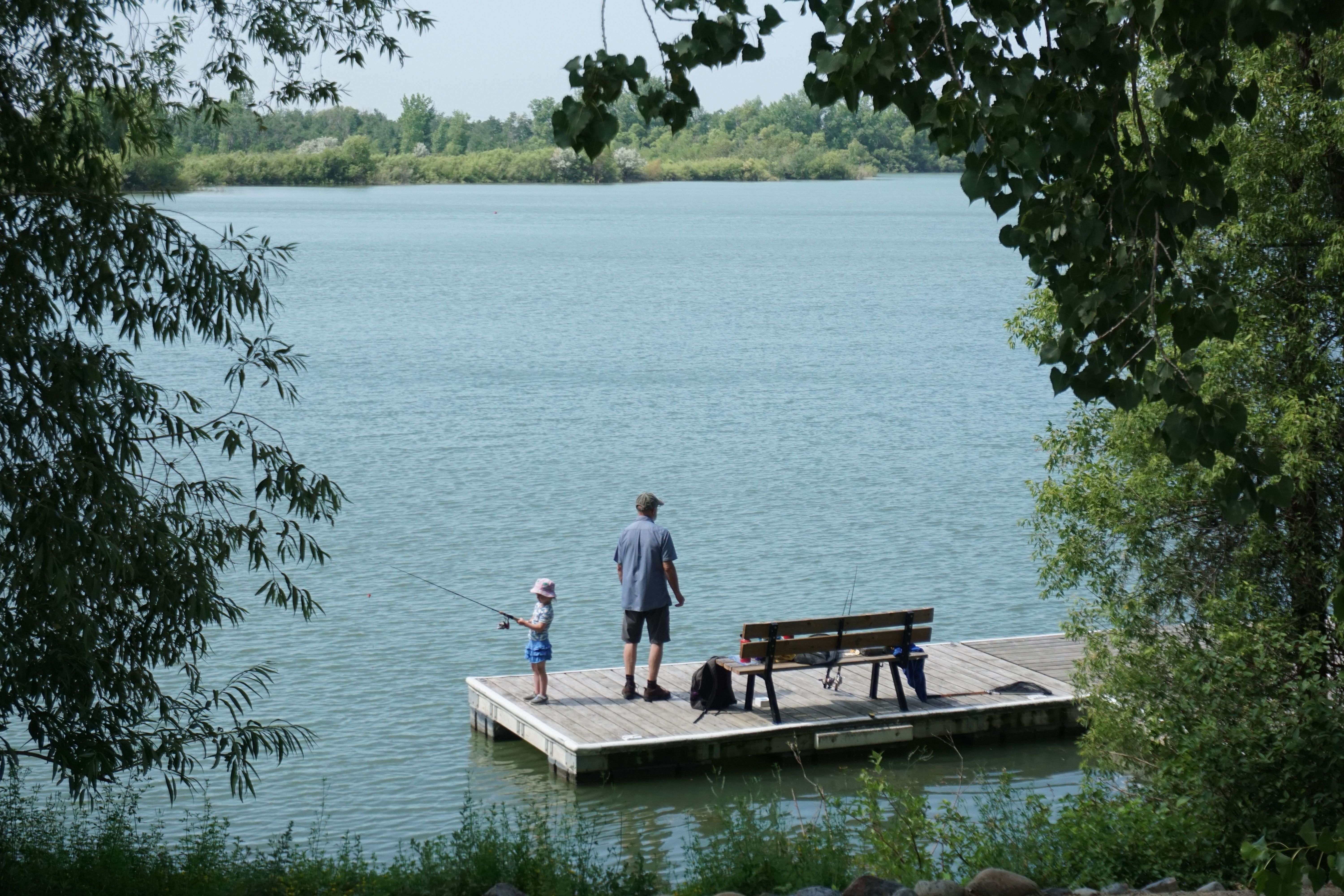
a man fishing with his daughter on a dock


3. Hopeville: Historic Mill Sites

Recreation and History


Hopeville combines Griswold's industrial heritage with outstanding recreational opportunities. Once centered around textile manufacturing, the village today is best known for Hopeville Pond State Park.


Living nearby provides convenient access to:


  • Swimming
  • Boating
  • Fishing
  • Kayaking
  • Camping
  • Walking trails
  • Picnic areas


Many homes overlook wooded landscapes or water features, creating a scenic environment that appeals to active families and retirees alike.


Housing options include charming cottages, year-round waterfront homes, and traditional New England residences that reflect the area's historic character.


4. Glasgow: Riverfront Serenity

Waterfront Living


Located in southeastern Griswold, Glasgo offers some of the town's most picturesque waterfront scenery. The Pachaug River and Glasgo Pond create a peaceful backdrop that attracts buyers looking for natural beauty and privacy.


Many historic homes real estate opportunities in Glasgo feature generous lots surrounded by mature trees and water views.


The area is especially attractive to buyers who enjoy:


  • Canoeing
  • Fishing
  • Bird watching
  • Quiet country roads
  • Scenic riverfront living


While the pace of life is slower than in Jewett City, many residents appreciate the tranquility and easy access to nearby shopping and services.


farm house near tall trees


5. Doaneville: Peaceful Village Life

Quiet Residential Enclaves

Doaneville reflects the slower pace that defines much of eastern Connecticut. Residential streets are lightly traveled, and homes are spread across wooded lots and open countryside.

Buyers regularly monitor local listings here for:


  • Mid-century ranch homes
  • Historic farmhouses
  • Cape-style homes
  • Properties with several acres


For those looking to escape traffic congestion while remaining within commuting distance of larger employers, Doaneville offers an appealing balance of affordability and rural living.


6. Rixtown Agricultural Roots

Farming and Acreage

Rixtown maintains strong agricultural traditions that continue to shape the local landscape today.

Large open fields, working farms, and rolling countryside create excellent opportunities for buyers seeking additional land for gardening, livestock, or future custom home construction.

Many parcels provide unobstructed views of Connecticut's rural scenery, making Rixtown particularly attractive for homeowners who prioritize privacy and outdoor space over dense neighborhood development.

Because development remains limited, acreage properties here often offer excellent long-term value.


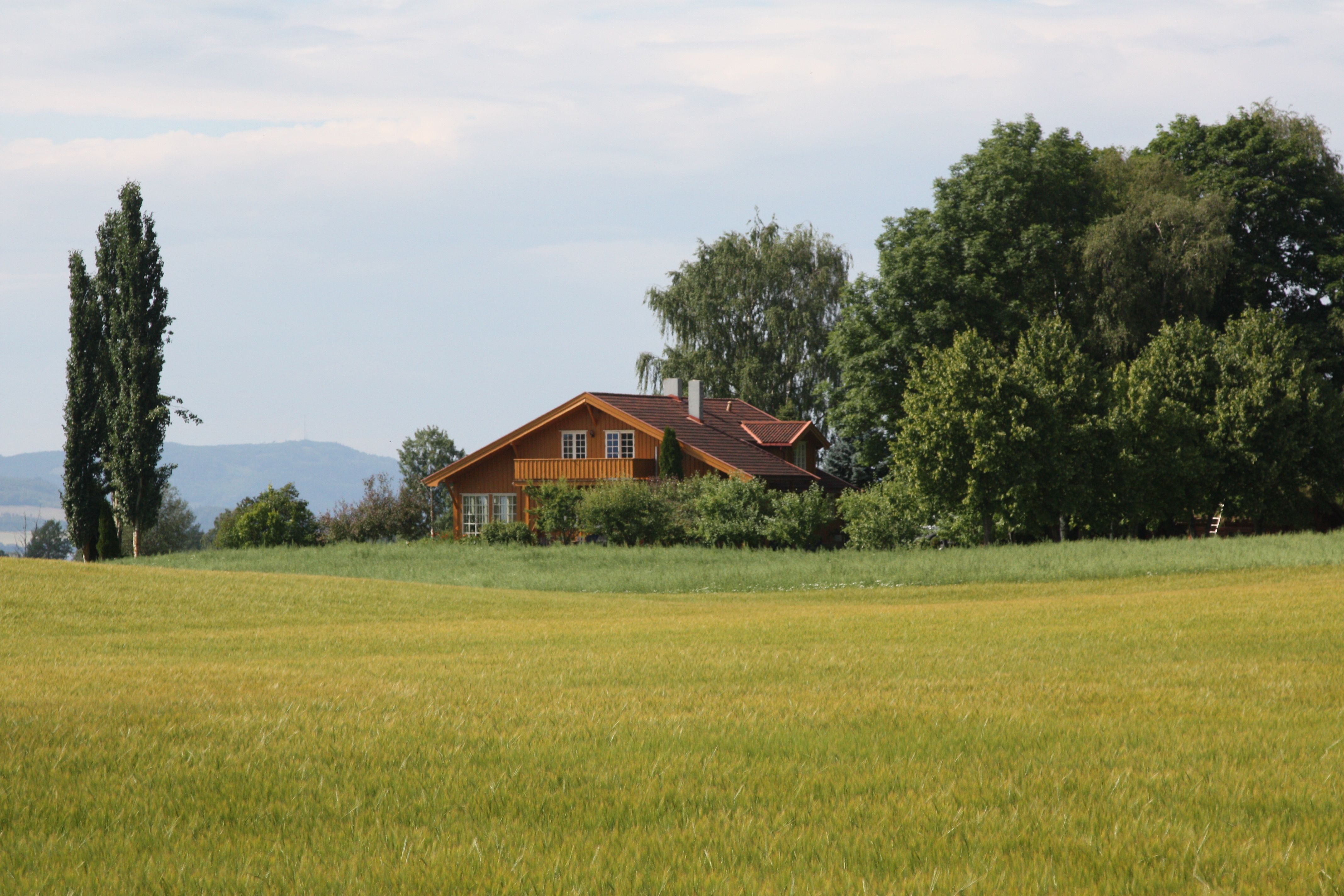
farm house in rural field


7. The Rural Outskirts and Historic Homes

Classic New England Architecture

When searching for historic homes real estate, the rural areas connecting Griswold's seven villages showcase some of the town's oldest and most architecturally significant properties.

Buyers exploring historic homes will encounter beautifully preserved 18th-century and early 19th-century residences featuring:


  • Wide-plank hardwood floors
  • Massive central chimneys
  • Original fireplaces
  • Exposed timber framing
  • Stone foundations
  • Handcrafted woodwork
  • Historic stone walls


Many of these homes sit on generous parcels that preserve the area's original agricultural landscape while offering homeowners a rare opportunity to own an authentic piece of Connecticut history.


Older homes may also require specialized inspections to evaluate foundations, roofing, electrical systems, and preservation needs before purchase.


Griswold Villages Comparison Table


Village Area Primary Vibe Typical Housing Style Style Recreational Access
Jewett City Borough / Convenient Historic Colonials & Multi-Family Walkable Riverfront Parks, Quinebaug River
Pachaug Rural / Forested Equestrian Acreage & Custom Builds Pachaug State Forest
Hopeville Active / Scenic Waterfront Cabins & Single-Family Hopeville Pond State Park
Glasgo Peaceful / Waterfront Riverfront Estates & Vintage Homes Glasgo Pond, Pachaug River
Doaneville Quiet / Residential Ranch Homes & Historic Farmhouses Rural Roads, Nearby Parks & Trails
Rixtown Agricultural / Spacious Farmhouses, Acreage & Custom Estates Open Farmland, Scenic Countryside
Rural Outskirts Historic / Countryside Antique 18th-Century Homes & Country Estates Forests, Rivers & Conservation Areas


Target Your Historic New England Lifestyle

Choosing the right location in New London County starts with identifying the lifestyle that best fits your needs. 

Some buyers value the convenience and walkability of Jewett City, while others are drawn to the wooded privacy of Pachaug or the waterfront setting of Glasgo. 

Whether you're comparing Griswold 7 villages homes for sale or searching for a unique Griswold house for sale, understanding each village's character will help you make a confident and informed decision.

If you're ready to explore Griswold's unique villages and available homes, call (860) 774-2733 to begin your search with knowledgeable local assistance.


Griswold's 7 Historic Villages Real Estate Guide


Frequently Asked Questions

What school district serves the families living in the 7 villages of Griswold?
The entire town is primarily served by Griswold Public Schools, which includes elementary, middle, and Griswold High School. Several private and regional educational options are also available nearby.
Are there specific zoning restrictions for owning horses in Pachaug?
Horse ownership is generally permitted on appropriately zoned properties with sufficient acreage. Requirements vary by parcel, so buyers should verify current zoning regulations with the Town of Griswold before purchasing.
How long is the typical commute from Griswold to major employers in Groton or Norwich?
Norwich is typically about a 20-minute drive from most areas of Griswold, while Groton generally ranges from 30 to 40 minutes depending on the specific village and traffic conditions.
Do most historic homes in Griswold operate on private well water and septic systems?
Many rural properties do rely on private wells and septic systems, particularly outside Jewett City. Buyers should always have both systems professionally inspected during the home-buying process.
Is Jewett City a separate town or part of Griswold, Connecticut?
Jewett City is not a separate town. It is the incorporated borough located within the Town of Griswold and serves as the community's primary commercial center.
Are there any gated communities located within the Griswold town limits?
No. Griswold does not have traditional gated residential communities. Most neighborhoods consist of established village streets, rural roads, and privately owned acreage.
What should buyers look for when inspecting a historic 18th-century home in New London County?
Pay close attention to the foundation, roof structure, electrical and plumbing systems, insulation, heating equipment, moisture intrusion, and any previous renovations. A home inspector with experience evaluating historic properties can help identify maintenance needs while preserving the home's original character.


Posted in Real Estate Blogs
June 27, 2026

Best Neighborhoods in Brooklyn, CT for Home Buyers

Best Neighborhoods in Brooklyn, CT for Home Buyers


Brooklyn, Connecticut, is a small town with a rich agricultural heritage, scenic countryside, and a welcoming community atmosphere. 


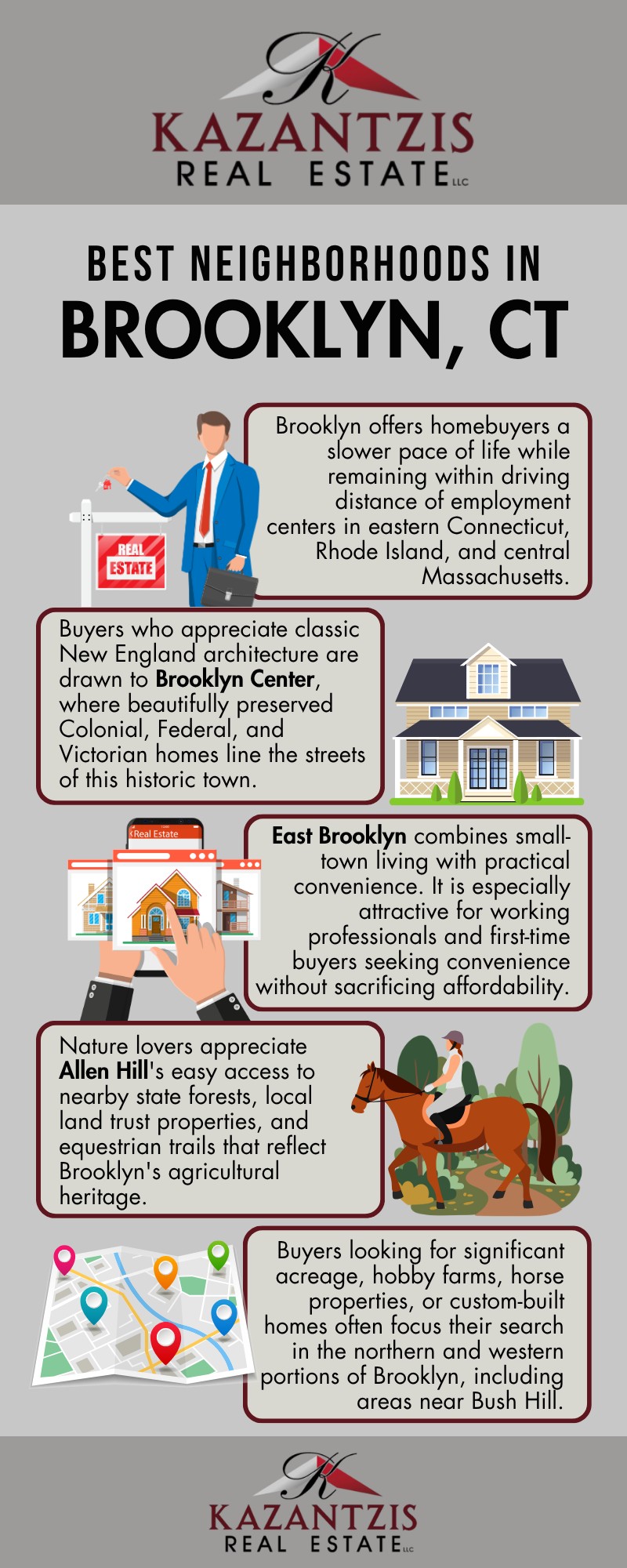
Nestled in Windham County, it offers homebuyers the opportunity to enjoy a slower pace of life while remaining within driving distance of larger employment centers in eastern Connecticut, Rhode Island, and central Massachusetts.


Because Brooklyn is primarily rural, choosing a home isn't simply about selecting a subdivision. Instead, buyers often choose between historic village settings, commuter-friendly corridors, family-oriented residential pockets, or secluded acreage. 


This comprehensive real estate guide explores the distinct areas of town to help you identify the best neighborhoods in Brooklyn, CT, for your lifestyle and budget.


What Are the Best Neighborhoods in Brooklyn, CT?


The best neighborhoods in Brooklyn, CT, include the historic Brooklyn Center for its classic colonial charm, East Brooklyn for its immediate access to retail and highways, and the Allen Hill region for spacious, rural living. These top Brooklyn, CT, communities offer excellent privacy, low crime rates, and a peaceful, agricultural lifestyle.


Exploring the Top Brooklyn CT Communities


Although Brooklyn is a relatively small town, each area offers its own advantages. Whether you're purchasing your first home or searching for more space without stretching your budget, understanding the character of each neighborhood can help you make a confident decision.


luxury waterfront real estate at twilight


1. Brooklyn Center: Historic New England Charm


The Vibe and Appeal


Brooklyn Center is the heart of the community and one of the town's most recognizable areas. 


Buyers who appreciate classic New England architecture are naturally drawn here, where beautifully preserved Colonial, Federal, and Victorian homes line streets surrounding the historic town green.


Many homes date back to the 18th and 19th centuries, giving the neighborhood a timeless appeal that's difficult to replicate in newer developments. 


Residents also enjoy being close to local churches, civic buildings, and the famous Brooklyn Fairgrounds, home to one of the oldest agricultural fairs in the country.


For buyers who appreciate history, walkable community events, and architectural character, Brooklyn Center consistently ranks among the best neighborhoods in Brooklyn CT.


Buyer Strategy


Many properties within the historic district offer unique craftsmanship, original woodwork, and period details. However, buyers should understand that historic properties may be subject to preservation guidelines that regulate exterior changes.


Before purchasing, review any applicable local historic district requirements if you plan to renovate, replace windows, or make significant exterior improvements. Factoring these considerations into your budget can help avoid surprises later.

serene lakeside houses at sunrise


2. East Brooklyn: Commuter Convenience


Accessible Living


East Brooklyn combines small-town living with practical convenience. Located near the Quinebaug River and bordering the town of Killingly, this area provides quick access to Interstate 395 and the Route 6 commercial corridor.


For residents commuting to Norwich, Putnam, or larger employment centers in Rhode Island and Massachusetts, this location significantly reduces travel time while allowing homeowners to enjoy Brooklyn's quieter atmosphere.


Its accessibility makes East Brooklyn especially attractive for working professionals and first-time buyers seeking convenience without sacrificing affordability.


Housing Types


Compared to other parts of town, East Brooklyn features a higher concentration of mid-century ranches, split-level homes, duplexes, and modest single-family residences.


Many of these homes offer practical floor plans and manageable lot sizes, making them an attractive entry point into the local housing market. Budget-conscious buyers often discover excellent value here compared to more densely populated Connecticut communities.


residential house among trees in autumn foliage and a garden


3. Allen Hill Area: Spacious and Family-Focused


The Suburban-Rural Blend


When searching for family-friendly areas, Brooklyn, CT, residents frequently recommend the Allen Hill and South Main Street corridors consistently stand out.


This part of town offers larger residential lots, quiet winding roads, mature trees, and a peaceful atmosphere that appeals to growing families. Many homes feature generous yards, providing space for outdoor activities, gardening, or future additions.


Its proximity to Brooklyn's elementary and middle schools also makes daily routines more convenient for families with children.


Outdoor Recreation


Nature lovers appreciate Allen Hill's easy access to nearby state forests, local land trust properties, and equestrian trails that reflect Brooklyn's agricultural heritage.


Whether enjoying hiking, horseback riding, cycling, or simply spending weekends outdoors, residents benefit from abundant recreational opportunities close to home.


The combination of spacious properties and outdoor amenities makes this one of the top Brooklyn, CT communities for buyers seeking a balanced lifestyle.


serene autumn view of waterfront homes


4. The Rural Outskirts: Acreage and Privacy


Unrestricted Space


The northern and western portions of Brooklyn, including areas near Bush Hill and the Pomfret town line, offer some of the town's largest residential properties.


Buyers looking for significant acreage, hobby farms, horse properties, or custom-built homes often focus their search here. These rural locations provide exceptional privacy, minimal traffic, and panoramic views of Connecticut's rolling countryside.


For homeowners who value peace and open space, these areas represent some of the most desirable settings available.


Utility Considerations


Many Brooklyn CT homes for sale in these rural sections rely on private wells and septic systems instead of municipal utilities.


Because these systems are essential to a property's functionality, buyers should schedule comprehensive inspections during the purchasing process. Testing water quality, evaluating well production, and inspecting septic systems can help prevent costly repairs after closing.


Additionally, larger rural properties may require more ongoing maintenance, including driveway care, landscaping, and snow removal during winter months.


Brooklyn CT Neighborhood Comparison Table


Neighborhood Area Primary Vibe Typical Housing Style Commuter Access
Brooklyn Center Historic / Quaint Antique Colonials & Victorians Moderate (Route 6)
East Brooklyn Convenient / Denser Mid-Century Ranch & Split-Level Excellent (Near I-395)
Allen Hill Area Family-Centric / Quiet(+3%) Traditional Single-Family Good
Rural Outskirts Secluded / Agricultural Custom Builds & FarmhousesDependent Moderate to Rural


Why Brooklyn Appeals to First-Time Buyers


Brooklyn offers several advantages for buyers entering the housing market.


The town maintains a lower population density than many Connecticut communities, resulting in quieter neighborhoods and larger lot sizes. 


Property taxes are often more manageable than in nearby metropolitan areas, while housing inventory frequently includes a mix of starter homes, historic residences, and custom properties.


Brooklyn has approximately 8,000 residents, preserving its close-knit community atmosphere while still providing access to everyday necessities, schools, healthcare, and regional transportation routes.


For buyers seeking long-term value, Brooklyn's combination of rural charm and accessibility continues to make it an attractive destination.


Align Your Location with Your Quiet Corner Lifestyle

Finding the right home in Windham County means balancing your priorities with the unique characteristics of each neighborhood. 


Whether you're drawn to the historic charm of Brooklyn Center, the commuter-friendly convenience of East Brooklyn, the spacious residential feel of Allen Hill, or the privacy offered by the rural outskirts, taking time to explore each location will help you make a smart investment.


Working with a trusted Brooklyn CT real estate guide can simplify your search and help you compare available properties based on your goals, budget, and lifestyle. By exploring the best neighborhoods in Brooklyn, CT, you'll be well-positioned to find the perfect fit among the top Brooklyn, CT, communities.


Whether you're buying your first home or looking for more space to fit your lifestyle, having an experienced local real estate professional by your side can make every step of the process easier. 


From identifying the right neighborhood to negotiating the best possible price, expert guidance helps you buy with confidence. If you're ready to explore homes in Brooklyn, Connecticut, call (860) 774-2733 today to begin your search and receive personalized assistance tailored to your needs.


Best Neighborhoods in Brooklyn, CT for Home Buyers


Frequently Asked Questions

What school district serves the families living in Brooklyn, CT?
Brooklyn is served by Brooklyn Public Schools for elementary and middle school education. High school students typically attend Woodstock Academy through a long-standing tuition agreement.
Are there any gated communities located within Brooklyn, Connecticut?
No. Brooklyn does not have traditional gated residential communities. Most neighborhoods consist of standalone homes on public roads.
How long is the typical commute from East Brooklyn to Providence or Worcester?
Driving times vary with traffic, but East Brooklyn is generally about 45 to 55 minutes from Providence and approximately one hour from Worcester via Interstate 395.
Do most Brooklyn CT homes for sale rely on private wells and septic systems?
Many homes outside the more developed portions of town use private wells and septic systems. Buyers should always include inspections of both systems during the home-buying process.
Are there specific zoning restrictions for keeping horses on residential property in Brooklyn?
Brooklyn has zoning regulations that govern agricultural uses and animal ownership. Requirements may vary depending on property size and zoning district, so buyers should consult local zoning officials before purchasing.
Which family-friendly areas in Brooklyn, CT, are closest to the local parks?
The Allen Hill and South Main Street areas provide convenient access to local recreational facilities, schools, athletic fields, and outdoor spaces, making them popular choices for families.
Is high-speed internet widely available in the rural outskirts of Brooklyn?
High-speed internet availability has expanded throughout much of Brooklyn, although service providers and connection speeds may vary in more remote areas. Buyers should verify available internet options before closing on a rural property.


Posted in Real Estate Blogs
June 23, 2026

Real Cost of Living in Brooklyn, CT, Before You Move

Real Cost of Living in Brooklyn, CT, Before You Move


Relocating to the historic Quiet Corner of New England offers a beautiful blend of rural charm, agricultural heritage, and classic small-town community. However, preparing for this transition requires a solid financial strategy. 


This guide explores the true cost of living in Brooklyn, CT, detailing everything from current housing prices to daily expenses, helping you navigate your move with confidence.


What Is the Brooklyn CT Cost of Living 


Brooklyn, CT, offers a relatively affordable cost of living compared to much of Connecticut, especially in housing. While home prices are lower than state coastal markets, residents must budget for higher property taxes, winter heating costs, and vehicle dependence. Overall, it supports a comfortable rural lifestyle with moderate monthly expenses.


a brick house with well maintained lawn


How Expensive Are Windham County, CT Housing Costs


The Affordable Shoreline Alternative


Windham County consistently ranks among the more affordable housing markets in Connecticut


Compared to coastal towns or suburban areas closer to New York City and Boston, Brooklyn offers significantly better value for single-family homes and older historic properties.


As of recent market trends, the median home price in the area generally hovers around $320,000, though pricing can vary depending on condition, acreage, and proximity to local amenities.


This makes Brooklyn an attractive option for buyers seeking space, privacy, and traditional New England architecture without the premium price tags seen in Fairfield or New Haven counties.


For buyers researching Brooklyn, Connecticut living expenses, housing is typically the largest but most predictable cost component.


Rent versus Buy Dynamics


Rental inventory in Brooklyn and surrounding rural towns is limited. Unlike urban centers, long-term rentals are not widely available, and when they are, they tend to be priced relatively high compared to purchase value.


Because of this imbalance, buying a home often becomes the more stable and cost-effective long-term decision. 


Monthly mortgage payments for a moderately priced home can sometimes be comparable to—or even lower than—rent in nearby towns when factoring in equity growth.


However, buyers should account for Connecticut’s property tax structure, which can significantly influence monthly escrow costs. Even with lower purchase prices, taxes can elevate overall monthly housing expenses.


a woman counting money with calculator

What Is a Realistic Brooklyn CT Monthly Family Budget

Housing and Local Taxes

A realistic Brooklyn CT monthly family budget starts with understanding property taxes. 


Connecticut towns rely heavily on property tax revenue, and Brooklyn is no exception. Mill rates in Windham County tend to be moderate to high compared to national averages.


Even with a reasonably priced home, property taxes can add several hundred dollars per month to escrow payments. This means two similar homes—one in Connecticut and one in a lower-tax state—can have very different total monthly costs.


When budgeting, homebuyers should factor in:


  • Mortgage principal and interest
  • Property taxes
  • Homeowners insurance
  • Potential HOA fees (if applicable)


Together, these determine the true monthly housing cost, not just the listing price.


Childcare and Daily Essentials


Beyond housing, families should consider everyday expenses. Grocery prices in Brooklyn are generally aligned with the Northeast average, though slightly higher than national benchmarks due to regional supply chains.


Healthcare access is strong across the region, with costs similar to those in other New England communities.


Childcare, however, is a key variable. Availability can be limited in smaller towns, and pricing may fluctuate depending on provider type and demand. Parents relocating should plan early, as waitlists for preschool and daycare programs are not uncommon.


scenic autumn waterfront home

Understanding Brooklyn, Connecticut Living Expenses

Energy and Heating Costs

One of the most significant factors in Brooklyn, Connecticut, living expenses is seasonal heating. Winters in Windham County are cold and long, often requiring extended heating from late fall through early spring.


Most homes rely on:


  • Heating oil
  • Propane
  • Electric heating systems


Heating costs can spike significantly during peak winter months, especially in older homes with less insulation. Energy-efficient upgrades—such as improved insulation, programmable thermostats, and modern HVAC systems—can meaningfully reduce annual expenses.


Homeowners should budget conservatively for winter utility increases rather than relying on mild-season averages.


view of a road ahead from a car


Transportation and Commuting


Brooklyn is a semi-rural town, meaning vehicle ownership is essential. Public transportation options are extremely limited, and most residents commute by car.


Common commuting destinations include:


  • Hartford
  • Worcester, MA
  • Providence, RI


Because of this, transportation costs should include:


  • Fuel (which fluctuates seasonally)
  • Routine maintenance
  • Insurance
  • Occasional highway tolls or long-distance travel


Commute times can vary widely depending on job location, so buyers should evaluate both distance and traffic patterns when selecting a home.


Cost of Living Comparison Table


Expense Category Brooklyn vs National Average Estimated Monthly Impact
Housing (Mortgage) Low (-15%) $1,500 - $2,500
Property Taxes Moderate to High Rolled into Escrow
Utilities (Winter Heating) High (Seasonal) Winter Budget Spike
Groceries Average (+3%) Standard
Transportation Moderate Commuter Dependent


Key Takeaway: Enjoy Quiet Living within Your Means


The Brooklyn CT cost of living reflects a balance between affordability and a rural New England lifestyle. 


While housing prices are generally more accessible than in many parts of Connecticut, buyers should not overlook the impact of property taxes, heating expenses, and transportation needs.


With proper planning, relocating to Brooklyn, Connecticut, can offer strong long-term value, especially for families seeking space, privacy, and a quieter pace of life. 


Understanding Windham County, CT housing costs and preparing a realistic monthly budget ensures a smoother transition and fewer financial surprises.


If you’re considering relocating to Brooklyn, Connecticut, and want clarity on pricing, neighborhoods, or current market opportunities, working with a local expert can make all the difference. 


For personalized guidance and up-to-date listings, contact Kazantzis Real Estate at 860-774-2733 or visit https://www.kazantzisrealestate.com/member/contact/ to start your home search with confidence.


Frequently Asked Questions

Is Brooklyn, CT, more expensive to live in than Hartford?
Hartford can offer lower home prices in some areas, but Brooklyn often provides more space and a quieter environment. Overall costs depend on housing type and commuting needs.
What are the property taxes like in Windham County, CT?
Property taxes are generally moderate to high compared to national averages, as Connecticut relies heavily on property tax revenue for local services.
How much should a family budget for winter heating in Brooklyn, CT?
Costs vary widely, but households should expect noticeably higher utility bills in winter, especially in older homes using oil or propane systems.
Is public transit available for commuters in Brooklyn, CT?
Public transit is very limited. Most residents rely on personal vehicles for commuting and daily travel.
How does the cost of living on the eastern side of Connecticut compare to the western side?
Eastern Connecticut, including Windham County, is generally more affordable than western areas closer to New York City suburbs.
Are groceries more expensive in Brooklyn, Connecticut, than in neighboring states?
Grocery prices are slightly above the national average and comparable to those in nearby New England states.
What is the average cost of a single-family home in Brooklyn, CT?
Recent estimates place the median home price around the low-to-mid $300,000 range, depending on property size and condition.
Posted in Real Estate Blogs
Aug. 27, 2021

Teacher-Turned-Realtor Larry Boada Uses Classroom Skills to Help Clients

At first glance, you probably wouldn't think teaching and real estate are closely related professions. However, the qualities you'd expect from a good teacher -compassionate, organized, diligent - are extremely similar to those you'd want in a Realtor. Teachers - like Kazantzis Real Estate Agent Larry Boada - are equipped with the skills to educate others in an easy-to-understand manner. So, it's no wonder helping clients navigate the real estate market comes as second nature to him. Boada recently discussed how his many years in the classroom make him better able to help his clients.

View More
Posted in Blog
Aug. 1, 2021

Kazantzis Realtor Christine Costa Urges Homebuyers to Keep Level Head in Hot Market

As home prices soar, it's easy for buyers to get caught up in the frenzy and buy outside of their budget.

In this week's Five Questions, Kazantzis Real Estate Agent Christine M. Costa says it's her job to help her clients make thoughtful decisions that fit their lives.

View More
Posted in Blog
July 16, 2021

Kazantzis Agent Sherry Bunn: Don't settle, the right home for you is out there

When COVID 19 hit, Kazantzis Real Estate Agent Sherry Bunn decided to make the best of it. Instead of kicking up her feet while furloughed from her job in the hospitality business, she opted to make a career change and became a licensed Realtor. Now, instead of giving guests an unforgettable experience, she's doing that for prospective home buyers and sellers. 

View More
Posted in Blog
June 18, 2021

Kazantzis Real Estate agent Alexis John knows customer service

Buying or selling a home is more than just a financial transaction for most people. Kazantzis Real Estate agent Alexis John explains why making a genuine connection with her clients enables her to help her clients realize their dream. 

View More
Posted in Blog
June 4, 2021

When it comes to land development, Kazantzis Realtor Demian Sorrentino see potential


When it comes to land development, Kazantzis Realtor Demian Sorrentino sees potential

Not everyone can look at an undeveloped parcel of land and see it for what it could be. But, then again, not everyone is Kazantzis Real Estate Agent Demian Sorrentino.

View More
Posted in Blog
May 21, 2021

AHWD-Certified Debra Prevost Helps Clients of Diverse Backgrounds Find Dream Home

Kazantzis Real Estate Agent Debra J. Prevost loves helping people find the perfect home for them.

In order to better assist her clients with diverse backgrounds, Prevost is certified in the National Association of Realtors At Home With Diversity program.

Prevost recently discussed how her experience sets her apart in the market and what she loves most about be a Realtor.

View More
Posted in Blog